
Pakistan is set to host face-to-face talks between the United States and Iran, aiming to solidify a fragile ceasefire and prevent further conflict in West Asia. The discussions will focus on a long-term peace arrangement, including sanctions relief, regional security, and Iran's nuclear program.

Amid growing international instability, folks all over the world are wondering if there is any country that can be considered a secure refuge, should this conflict expand into a larger war, drawing in many more nations.
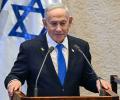
Israeli Prime Minister Benjamin Netanyahu asserts that the joint US-Israel campaign against Iran is progressing successfully, highlighting Israel's strengthened position and hinting at new regional alliances.

For weeks, the war skirted the edge of catastrophe without tipping over. Missiles flew, there was much destruction, commanders were assassinated, cities across the Gulf and even in Israel struggled to absorb the shock. But one line held: Energy infrastructure, the arteries of the global economy, remained largely untouched. That is no longer true. Prem Panicker continues his must read daily blog on the Gulf War.

60 years ago, on January 24, 1966, Dr Homi J Bhabha, the father of India's nuclear programme, died in an air crash on Mont Blanc. The official inquiry said the plane went off course in bad weather, but coincidences, missing evidence, and later unproven claims have kept conspiracy theories alive. A fascinating excerpt from Bakhtiar Dadabhoy's book, Homi J Bhabha: A Life.

'What we have yet to see on either the US or the Iranian side is willingness to compromise on their ultimate demands and the flexibility to reach an agreement to end the war.

For India, much is at stake: Crucial energy supplies traversing the Strait of Hormuz, the fate of its 10 million citizens living and working in West Asia -- who send generous remittances home -- and its major trade links with the region.

The Indian mission in Iran has advised its citizens to carefully consider the evolving security situation before undertaking non-essential travel to the country, citing recent regional developments and conflicts.

The Israeli Air Force (IAF) said it struck several targets in Tehran, Shiraz and Ahvaz simultaneously over the past 24 hours, targeting sites linked to Iran's ballistic missile programme, air defence systems and military headquarters.
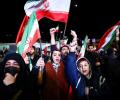
'American stature has been reduced because they have not been able to achieve their aims.'

Fight on toward goals that keep receding, or exit with most objectives unmet. Trump is agitated, his poll numbers falling below the Plimsoll line, his base fractured between those who back the war and those who remember that he campaigned on ending them.

Karex, the Malaysian company that makes roughly one in five of the world's condoms -- about five billion a year, supplying Durex and Trojan among others -- announced this week that it is raising prices by up to 30 percent. The reason is the Strait of Hormuz.
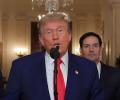
The Pakistan government, as well as the country's military establishment, have come under severe criticism from netizens on social media for recommending United States President Donald Trump for the Nobel Peace Prize.

The purge in Washington does not pause the war. Strikes continue, Hormuz remains closed, and Brent crude is still dancing around $109 a barrel. For India, the command chaos in the Pentagon is another layer of uncertainty piled on five weeks of conflict that was already straining every buffer Delhi has.

The always dependable Pratik Gandhi finds a match in Sunny Hinduja and they are surrounded by a top notch supporting cast, observes Deepa Gahlot.

Rajagopala Chidambaram, a renowned Indian scientist who played a pivotal role in the country's nuclear tests of 1975 and 1998, passed away on Saturday at the age of 88. He was also associated with India's nuclear weapons program and served as chairman of the Atomic Energy Commission and Principal Scientific Advisor to the government.
In a high-risk military operation early Sunday, the United States launched coordinated airstrikes on three of Iran's most fortified nuclear sites -- Fordo, Natanz, and Isfahan -- marking a decisive escalation in the ongoing Israel-Iran conflict.
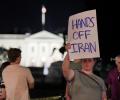
Following attacks on Iranian nuclear sites, including Fordow, Isfahan, and Natanz, the Atomic Energy Organisation of Iran (AEOI) has stated that the attacks are a violation of international law and that Iran's nuclear industry will continue its development.

Iran has fired 280 ballistic missiles at Israel since early Friday in retaliation to Israeli strikes on its nuclear programme, its military and political officials, and nuclear scientists.

'The next two to three weeks will not be decided in Washington.' 'They will be decided in Tehran, in whatever calculation Iran makes about the costs of continued resistance against the costs of appearing to have yielded.'
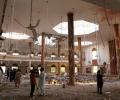
In 2025, India launched Operation Sindoor, a multi-domain combat mission against Pakistan in response to cross-border terrorism. The operation involved precision strikes, military retaliation, and diplomatic measures, marking a significant shift in India's security policy.

Trump's remarks came a day after the US launched Operation Midnight Hammer, targeting three of Iran's key nuclear facilities at Fordow, Natanz, and Isfahan.

The embassy of Iran in India on Wednesday shared a statement made by the director general of the International Atomic Energy Agency, where he said that they (IAEA) did not have any proof that Iran is going to make nuclear weapons.
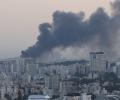
In an interaction with PTI Videos in New Delhi, Iran's deputy chief of mission to India Mohammad Javad Hosseini also said Americans should "put pressure" and bring the other side back to the negotiating table.

Air India on Friday announced that several of its international flights were either diverted or sent back to their origin due to the emerging situation in Iran and the closure of its airspace.
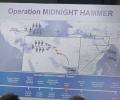
The Israel-Iran conflict has entered a 'decisive phase' after the United States bombed three major Iranian nuclear sites Sunday morning, feel strategic affairs experts with some of them arguing it was Washington, DC's 'responsibility' to not get involved in the military standoff.
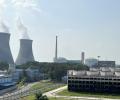
Ushering in reforms, Union Finance Minister Nirmala Sitharaman on Saturday proposed to open up the nuclear power sector for private players and announced a Rs 20,000 crore Nuclear Energy Mission for research in the field, with an aim to set up five small and modular reactors by 2033.

Security agencies at Mumbai's Nhava Sheva port intercepted and seized the consignment of a Karachi-bound ship from China after it was found carrying a dual-use consignment with implications for Pakistan's nuclear and ballistic missile programmes.

Sustaining 8 per cent-plus growth rates is necessary if we are to reach high-income status by 2047, points out Amitabh Kant.
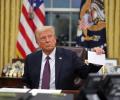
US President Donald Trump signed the National Defence Authorisation Act for Fiscal Year 2026 into law, highlighting broadened engagement with India and addressing the challenge posed by China in the Indo-Pacific region.

Although the credit for acquiring the technological skill must be given to India's outstanding nuclear scientists, the decision to go nuclear was a political one that entailed clarity of vision, courage and resolve, points out Rup Narayan Das.
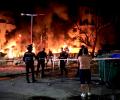
Amid the ongoing conflict with Iran, Israel's foreign ministry said on Thursday that Soroka Hospital in Beersheba in the southern part of Israel has suffered a direct hit in a missile attack.

Iran is fighting a different war: Older, slower, and in some ways more dangerous. Iran doesn't need to shoot down an F/A-18. It only needs to make the Strait of Hormuz feel dangerous long enough for insurance markets, shipping companies, and oil futures traders to do the rest. Prem Panicker continues his must-read daily blog on the war in the Middle East.

China's official media on Sunday criticised United States bomb attacks on Iranian nuclear sites as a further step toward the abyss, while experts in Beijing said the American bunker-buster bombs used in strikes may not be enough to destroy Iran's nuclear plants hidden deep underground.

Israel and the United States had a plan. Iran punched back. And now the Gulf is reeling, the world is beginning to feel the pain and, as on date, no one in Washington or Tel Aviv appears willing to admit that the punch has landed, notes Prem Panicker, continuing his must-read blog on the war in the Middle East.
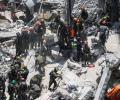
He made the comments while visiting the site of an early morning Iranian missile strike in the city of Bat Yam, close to Tel Aviv.
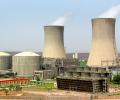
'Chinese are going bang, bang, bang building 30-35 reactors.' 'We should announce a programme of 50 new reactors and show that we mean business on the ground and not just announcements.'

Spies, aliens, dogs and lawyers, it's quite a colourful spread on your OTT watch this week, points out Sukanya Verma.
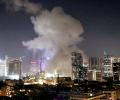
Israel's ongoing airstrikes and Iran's retaliation raised concerns about all-out war between the countries and propelled the region, already on edge, into even greater upheaval.
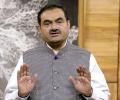
Adani Group on Monday said it does not handle any cargo coming from Iran or any Iranian-owned ship at any of its ports, as it denied any deliberate engagement in sanctions evasion. In a stock exchange filing, the group said reports of links between any of its entities and Iranian LPG are "baseless and mischievous".
